
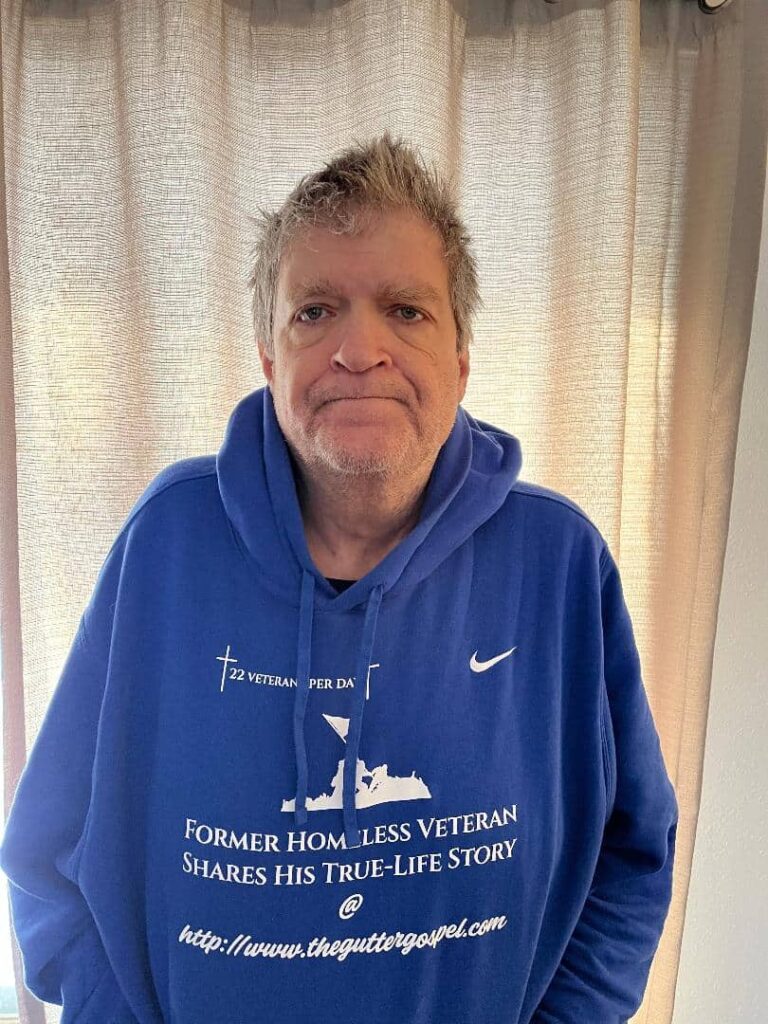
Some stories don’t just entertain—they reframe what survival looks like. Mike Smith, the author behind The Gutter Gospel—The Road to Redemption, shares a lived account shaped by homelessness, military service, mental illness, and addiction. Rather than positioning his memoir as a product to be sold, Smith’s mission is to remove barriers: he gives his autobiography away for free to expand awareness and reach people who may feel invisible, unheard, or beyond help.
In a media landscape that often compresses hardship into headlines, Smith’s work offers something more valuable: a sustained, unfiltered narrative that shows how recovery is rarely linear—and why hope can still be rational even after years of chaos. For readers looking for a realistic account of redemption that doesn’t rely on clichés, The Gutter Gospel is positioned as a direct invitation into a story told with grit, honesty, and purpose.
A Story Rooted in Lived Experience, Not Theory
Memoirs about addiction and recovery often succeed or fail on one essential element: credibility. Smith’s credibility isn’t crafted—it’s earned. As a former homeless veteran who has battled mental illness and addiction, he writes from the trenches rather than from a distance. The result is a narrative that speaks to the realities many people recognize but struggle to name: shame, isolation, relapse cycles, and the exhausting work of rebuilding identity after trauma.
What makes this type of storytelling impactful is not the shock value of suffering. It’s the clarity it can bring to readers who are searching for language to describe their own experiences—or to understand a loved one’s. When a memoir refuses to sanitize the hard parts, it can become a mirror for those still in the fight and a map for those trying to help.
Why Giving the Book Away Matters
Smith’s decision to make his autobiography available for free reflects a specific philosophy: the message matters more than the transaction. In practice, this approach does three important things:
- It reduces access barriers for people who may be financially strained—often the same people most affected by addiction, homelessness, and untreated mental health challenges.
- It increases global reach, aligning with Smith’s stated challenge of attracting a worldwide audience to hear his story.
- It shifts the focus to impact, positioning the memoir as a tool for awareness, connection, and encouragement rather than a commercial commodity.
Instead of a traditional sales funnel, Smith accepts donations through his website, allowing supporters to contribute voluntarily while ensuring that the story remains accessible to anyone who needs it.
The Message at the Center: Unconditional Love and Human Worth
At the heart of Smith’s work is a direct, faith-forward message: God loves people unconditionally, every life has tremendous purpose, and every person matters. Regardless of a reader’s religious background, the underlying theme is universally relevant—human dignity is not something you earn after you get clean, stabilize, or “fix” your life. It is something you possess even while you’re struggling.
That framing can be especially meaningful for people affected by addiction and mental illness, where stigma often convinces individuals that they are defined by their worst moments. By emphasizing worth and purpose, the memoir’s message pushes back against the idea that anyone is disposable.
Authenticity as Differentiation in a Crowded Attention Economy
Smith describes his work as having “no competition” because of its authenticity and originality. In practical terms, that differentiation comes from a voice that doesn’t sound manufactured. Readers are increasingly skeptical of narratives that feel curated for approval. A “gritty, no-frills” memoir can cut through that skepticism because it prioritizes truth over polish.
For audiences seeking real-world insight into addiction, homelessness, and redemption, authenticity is not a stylistic preference—it’s the difference between inspiration that feels temporary and testimony that feels believable.
Reaching a Global Audience: What Helps Stories Travel
Smith’s biggest marketing challenge—attracting a global audience—is one many independent authors and mission-driven creators face. Stories tend to travel farther when they are:
- Easy to access (free distribution supports this directly).
- Clear in purpose (a defined message helps readers know what they’re sharing and why).
- Relevant across cultures (themes like suffering, resilience, and hope translate widely).
- Shareable in multiple formats (excerpts, interviews, and short reflections can introduce the larger narrative).
In other words, the same elements that make the memoir meaningful also make it scalable: accessibility, clarity, and a message that speaks to fundamental human experience.
Why This Memoir Resonates Now
Public awareness of mental health and addiction has grown, but many people still feel alone inside their struggles. Memoirs like The Gutter Gospel serve a distinct role: they humanize issues often reduced to statistics, and they remind readers that transformation is possible without pretending it’s simple.
For some, Smith’s story will be a source of encouragement. For others, it may be a wake-up call about what people endure in silence. Either way, the memoir’s value lies in its willingness to tell the truth—and to offer hope without denying pain.